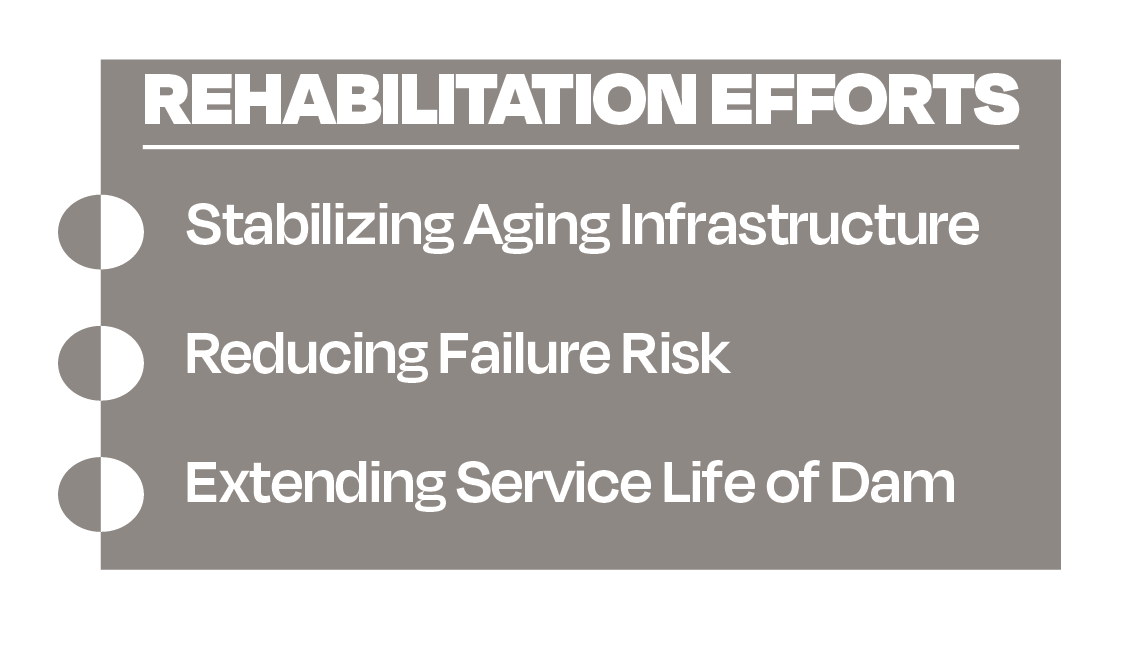
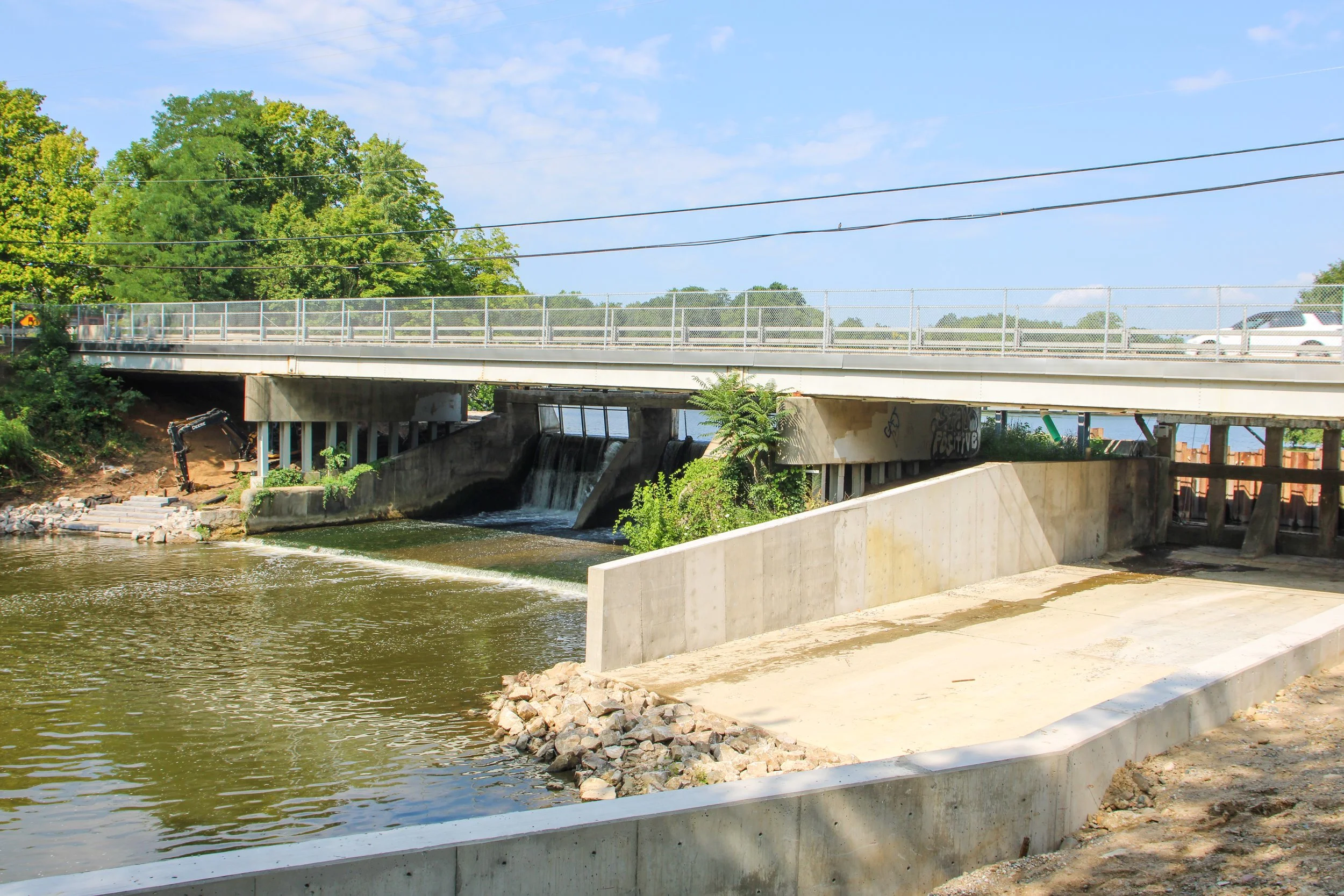
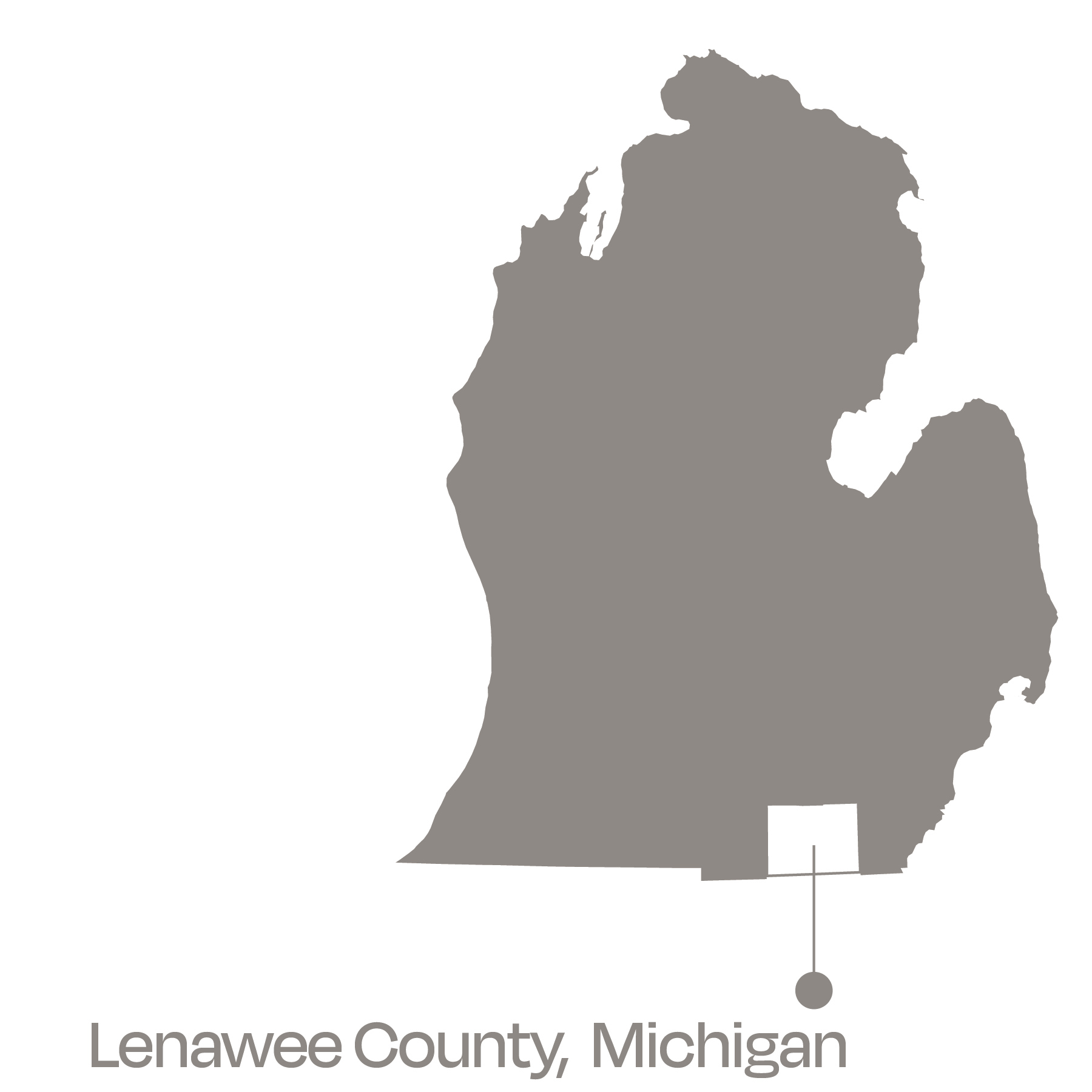
The Tecumseh Dam rehabilitation project marked a significant investment in the long-term safety and operation of Red Mill Pond and the surrounding River Raisin corridor in Lenawee County. Following a 2020 hydraulic study that identified several deficiencies, the Lenawee County Drain Commissioner worked with Spicer Group to evaluate the dam’s condition and develop a phased plan for improvements. What began as an assessment of the hydraulic performance evolved into a comprehensive rehabilitation effort focused on stabilizing the aging infrastructure, reducing failure risk, and extending the service life of a significant hazard dam that plays a central role in water level management and downstream protection.
Located near North Evans Street in the City of Tecumseh, the dam regulates Red Mill Pond while influencing flows that move downstream toward the Standish and Globe Mill Dams, both of which are classified as significant hazard structures. Approximately 80 parcels are identified as being at risk in the current Emergency Action Plan should uncontrolled flooding occur. In addition to private property, a failure could threaten transportation infrastructure and the local wastewater treatment plant. While the Tecumseh Dam and the North Evans Street bridge function as independent structures, erosion near the dam’s embankment could compromise both. These downstream and adjacent risks elevated the importance of addressing the deficiencies identified during the hydraulic review.
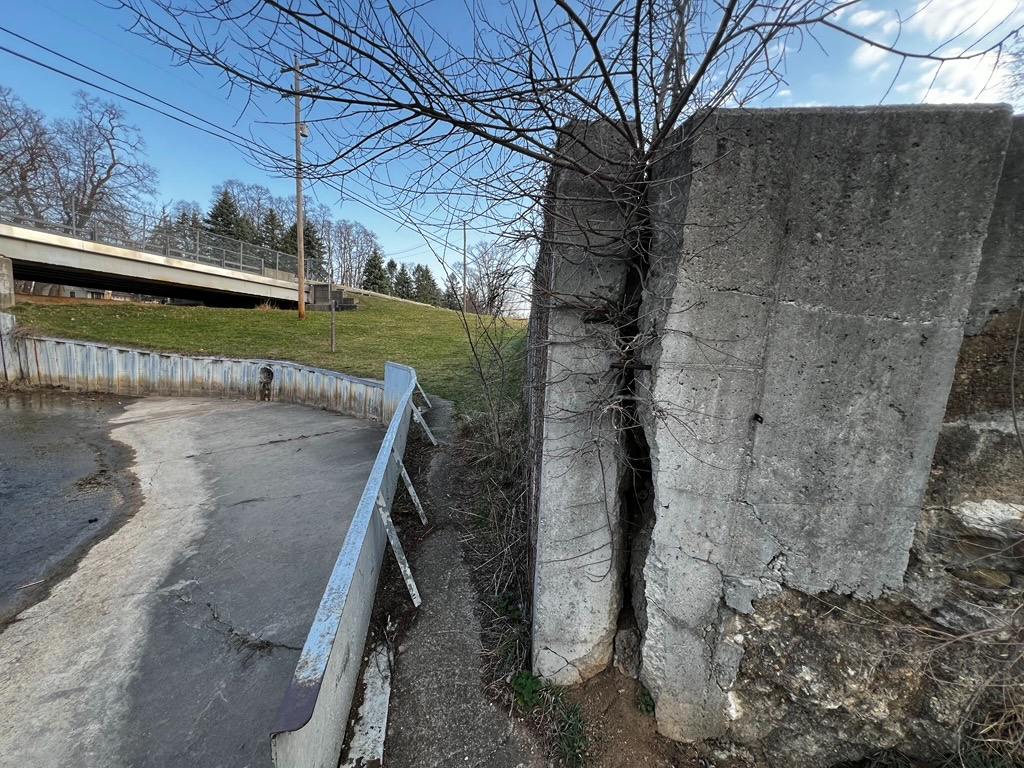
The dam’s primary spillway consisted of two 24-foot-long stop log bays and a 14-foot by 9-foot roller gate, while the auxiliary spillway included seven 4-foot by 5-foot sluice gates. Of those seven auxiliary gates, five were equipped with manual operators and two had no operators at all. Overall, the structure was in poor condition, with an estimated remaining service life of five to ten years. Inspectors documented a failed auxiliary spillway floor that was susceptible to erosion and undermining during major rainfall events. The alignment of that spillway also posed a concern because, if operated at full capacity, the flow could spill over and erode the close parkland. Moderate leakage was also occurring at the existing gates, and deterioration of seals and gate components increased the potential for failure.
Tecumseh Dam
Reinvesting in Resilience
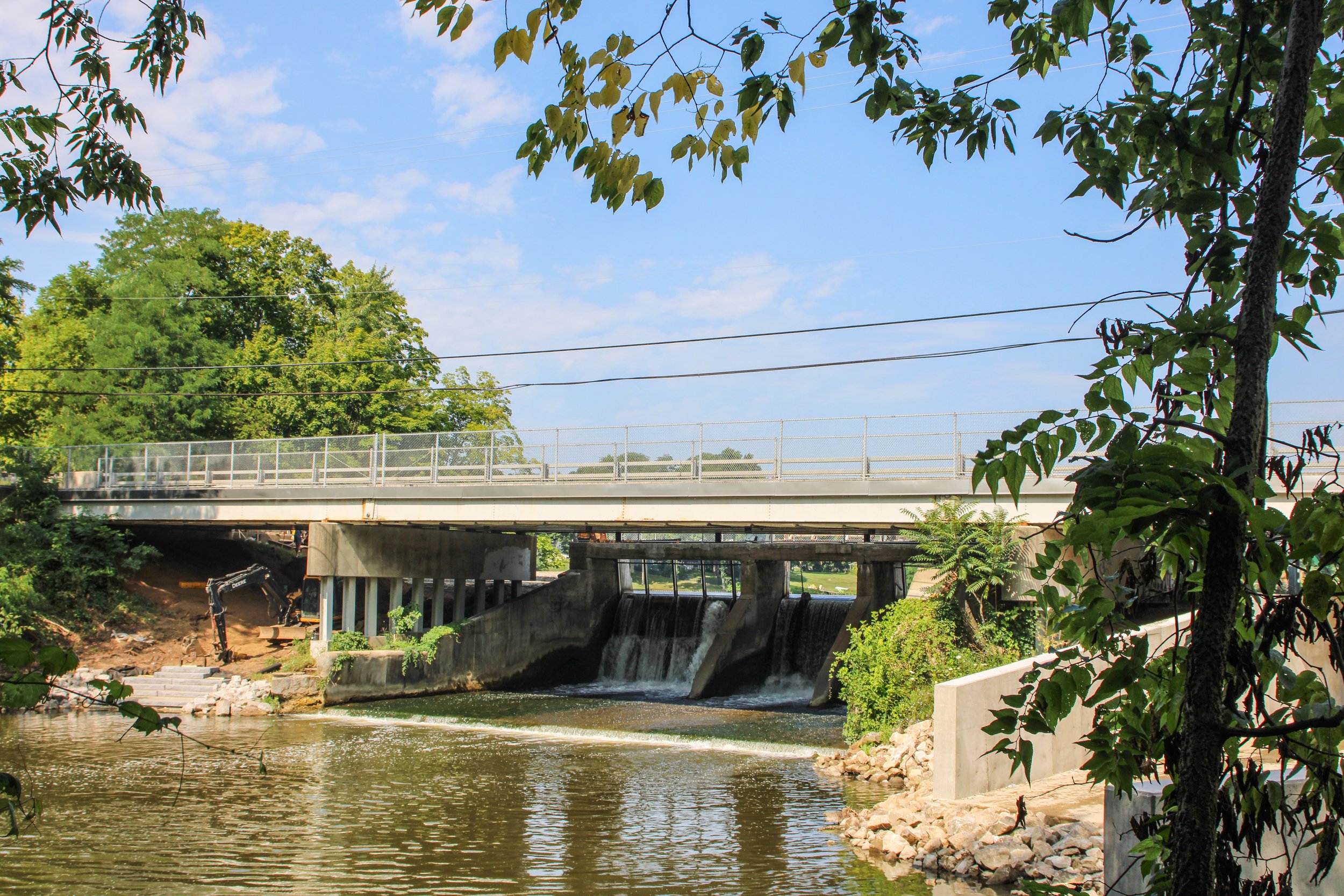
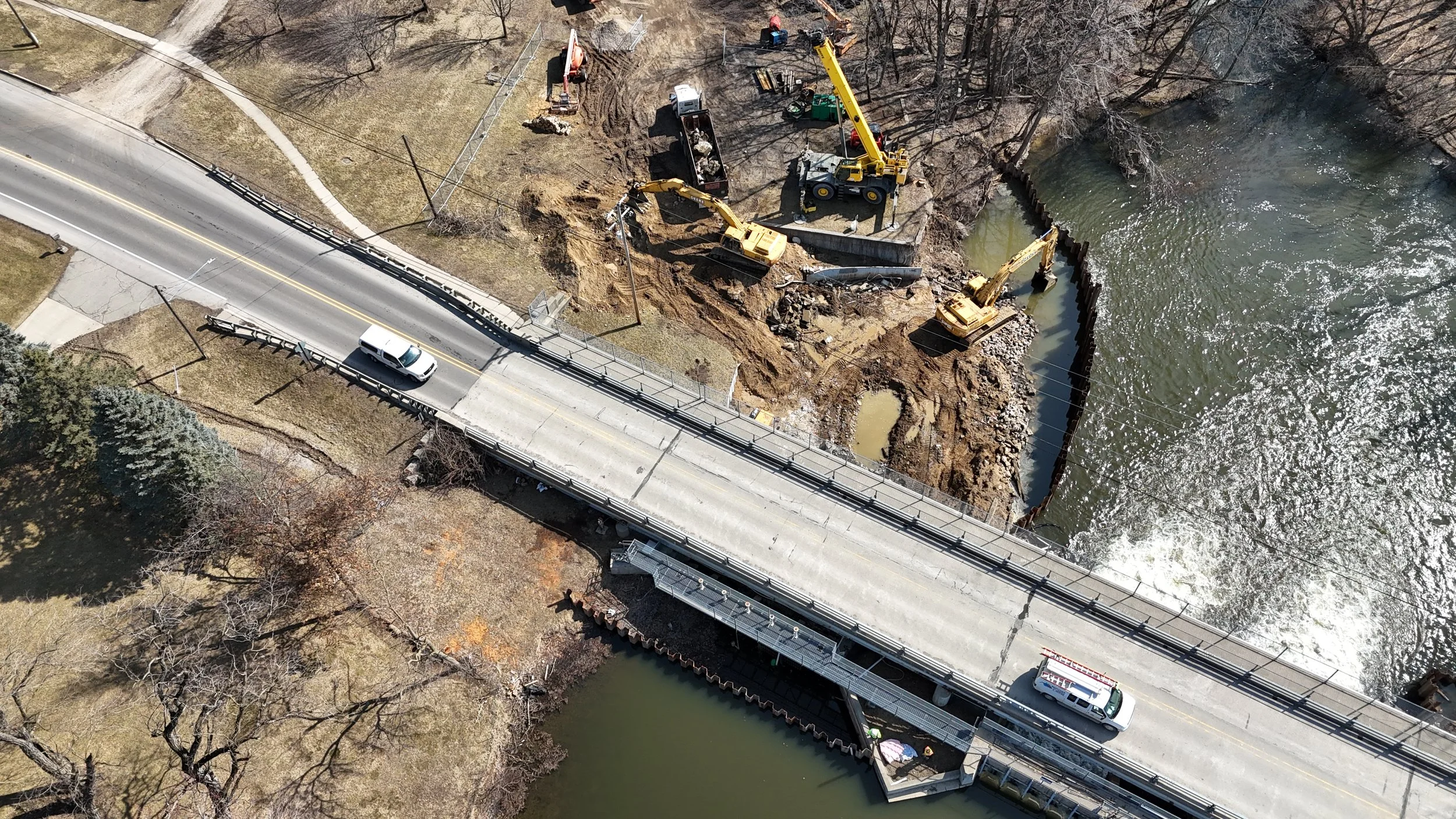
Based on these findings outlined in Spicer Group’s 2021 report, Lenawee County authorized continued professional engineering services to advance the project through preliminary and final design. Construction started in 2024 and ultimately spanned roughly 300 to 350 feet north to south and 200 to 250 feet east to west, crossing both sides of North Evans Street and affecting a substantial portion of the River Raisin and Red Mill Pond area.
A central component of the rehabilitation involved reconstructing and modernizing the auxiliary spillway.

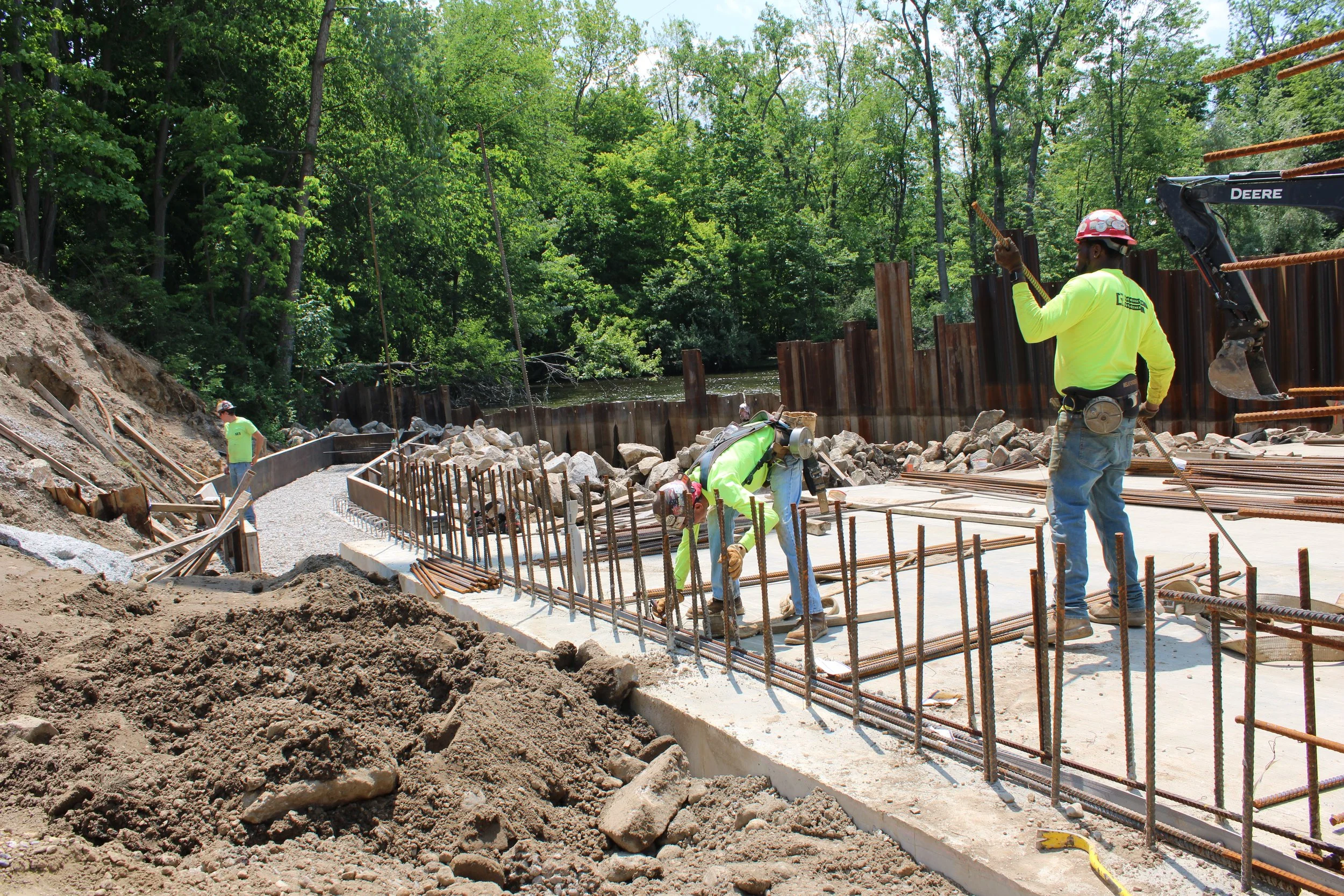
The failed floor was replaced, and the spillway position was improved to better control discharge and minimize the potential for erosion. An engineered concrete support wall approximately 88 feet long was constructed to stabilize the system and guide flow. The seven existing sluice gates were replaced with seven new 4-foot by 5-foot gates, each equipped with electric operators. This upgrade significantly improved operational control and reduced reliance on manual gate adjustments during storm events. Recognizing that electric operation introduces vulnerability during power outages, the design incorporated backup power or emergency manual operation to ensure functionality during critical conditions.
Repairs were also completed on the primary spillway. Structural rehabilitation of the right downstream support wall restored it from a poor to fair condition rating, improving its capacity to withstand water during high-flow events. The roller gate and stop log systems were evaluated and retained, with recommendations for routine inspection and maintenance. Identified leakage areas were sealed and remediated to reduce the potential for piping beneath both the primary and auxiliary spillways. Embankment stabilization measures were implemented to address areas of concern and reduce long-term erosion risk.
An additional project element that supported community use was the kayak portage that was integrated into the design to maintain recreational access along the River Raisin. The system also incorporated a Waterman 48-inch by 60-inch slide gate to enhance flow control capability.
With the completion of these improvements, the overall condition of the dam improved from poor to fair, and its anticipated remaining service life increased to an estimated 20 to 30 years. Routine annual maintenance is expected to include exercising and greasing gates, minor crack sealing, debris removal, mowing, and painting or surface touch-ups.
A life-cycle cost analysis prepared in conjunction with the project estimated the total replacement cost of the existing structure at approximately $6.2 million. By pursuing targeted rehabilitation rather than full replacement, the County extended the useful life of the dam while managing financial impact.
The Tecumseh Dam rehabilitation reflects a coordinated effort to address aging infrastructure in a careful and financially responsible manner.
By combining hydraulic analysis, structural repair, operational upgrades, and risk assessment, Lenawee County and Spicer Group strengthened the dam’s stability, improved safety, and positioned Red Mill Pond for continued, controlled water level management in the years ahead.