Village of Stratton Storm Sewer Pump Station Project
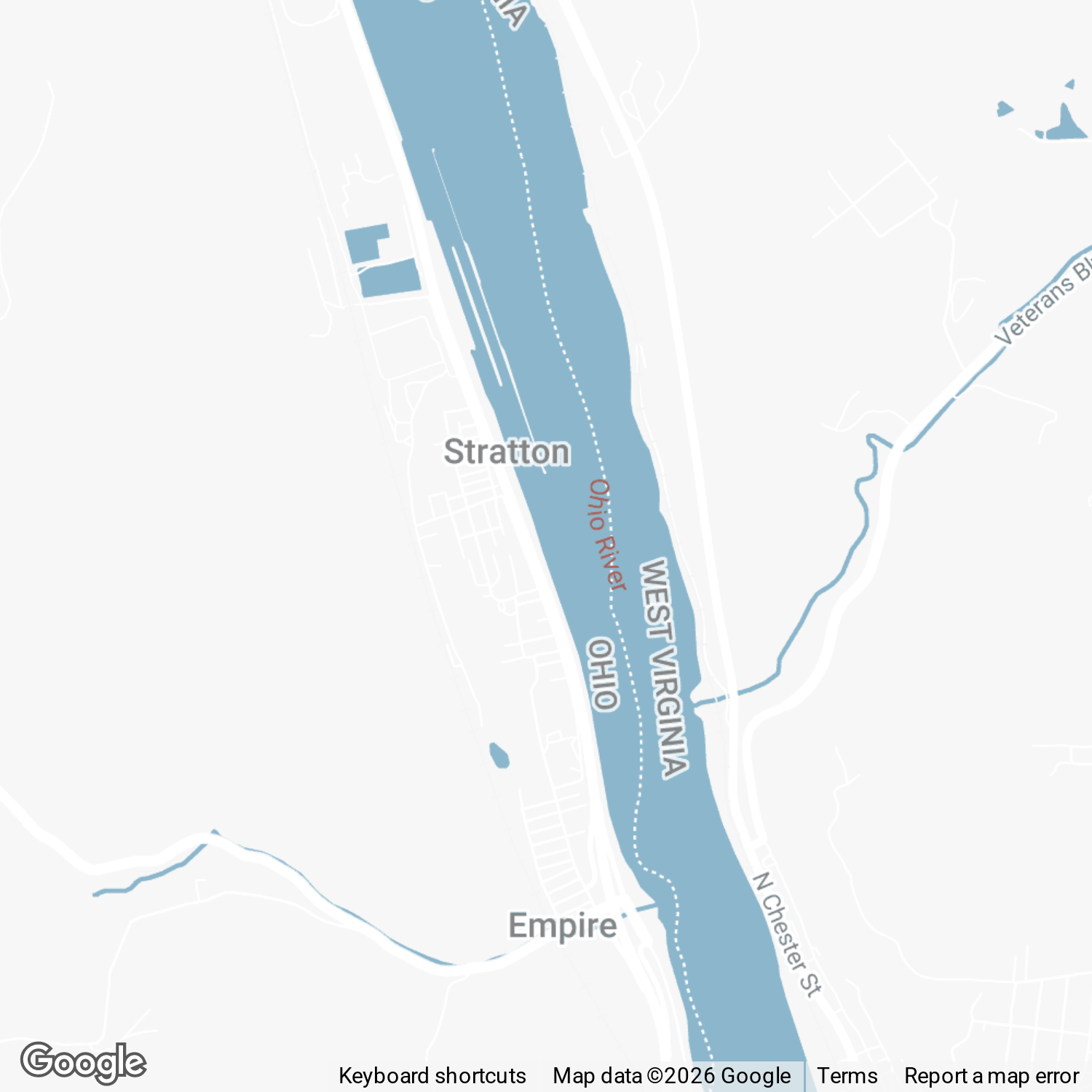
Village of Stratton, Ohio
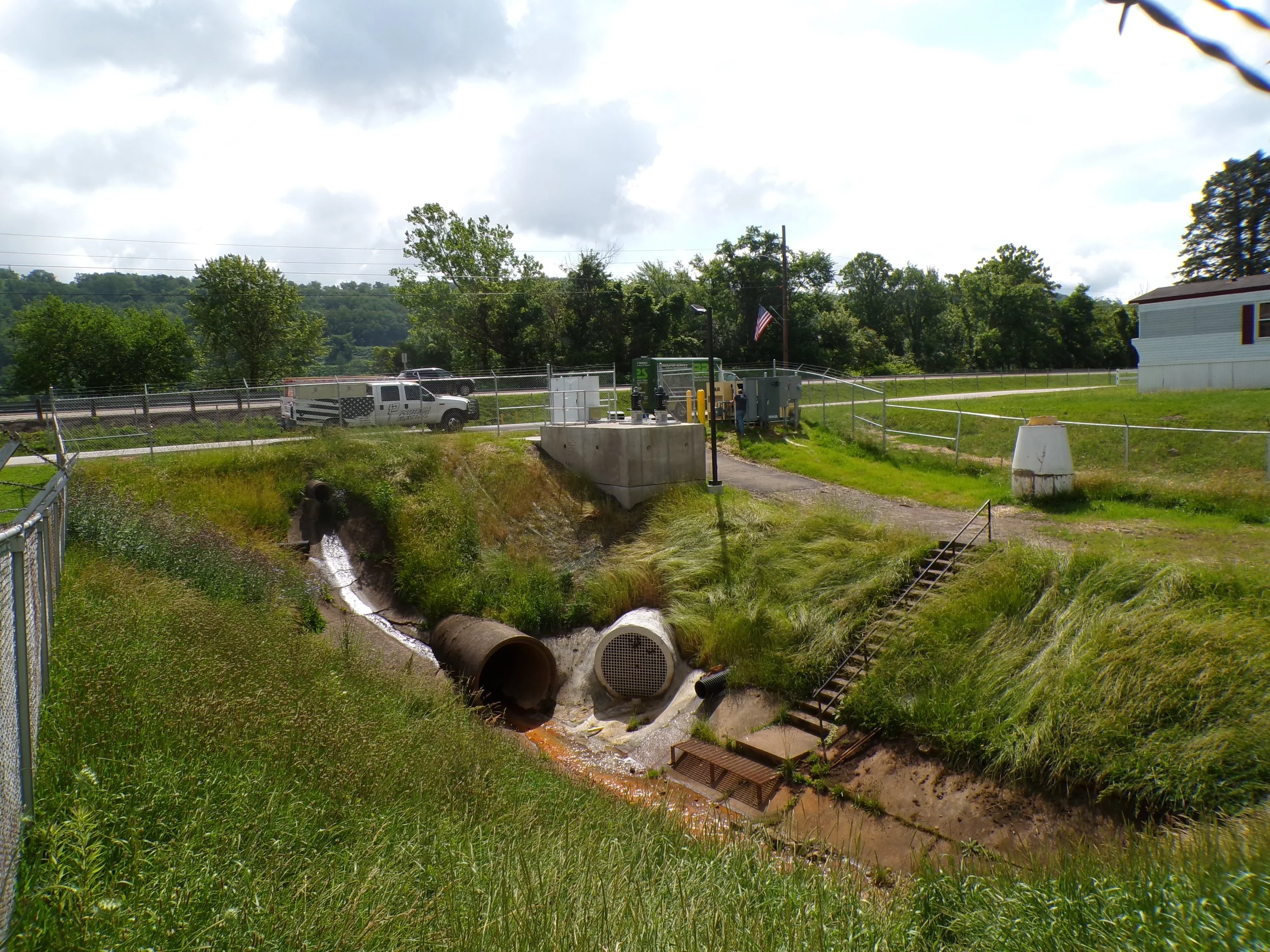
(Photo Above: Pump Station Construction Nearing Completion)
Construction is now complete on the Village of Stratton’s new storm sewer pump station, a project designed to provide long-term flood protection and improve the community’s ability to manage stormwater during high-water events along the Ohio River. Located near State Route 7 and 1st Avenue, the facility was built to safely collect stormwater and convey it to the river when gravity drainage is no longer possible. The total project cost was more than $1 million, with construction by S.E.T., Inc. beginning in July 2024 and reaching completion in June 2025.
The project was designed and delivered by W.E. Quicksall & Associates, who joined Spicer Group at the end of 2025, bringing decades of experience in Ohio communities. For years, the Village relied on temporary measures during major storm events. When heavy rains combined with high river levels, water had nowhere to go.
“We needed a permanent solution,” Mayor Paul Zdinak said. “We used to take portable pumps and put them into a Hi-Lo and pump water out by hand.”
That approach required manpower, equipment, and time during already stressful flood conditions. The new pump station replaces that system with a fixed, automated facility designed to operate when it is needed most.
At the center of the project is a precast concrete wetwell measuring approximately 14 feet by 8 feet and extending 22 feet below ground surface. The structure houses a duplex pumping system equipped with two pumps capable of moving a combined 26,000 gallons per minute. During heavy rainfall events, stormwater enters the wetwell and is lifted through a forcemain that carries it beneath State Route 7 and discharges it into the Ohio River. The forcemain includes 362 linear feet of 14-inch high-density polyethylene pipe, carefully installed to accommodate the roadway crossing.
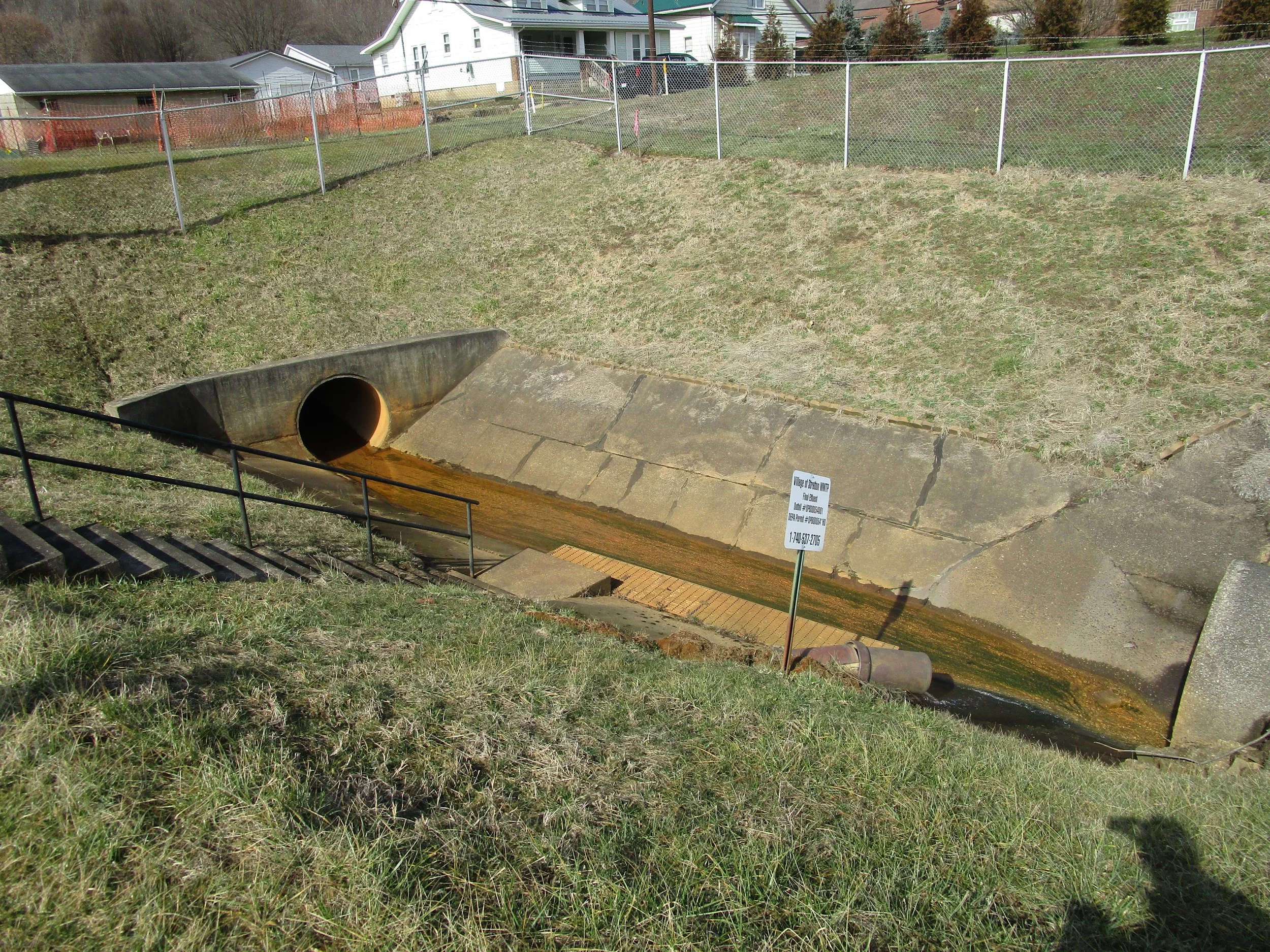
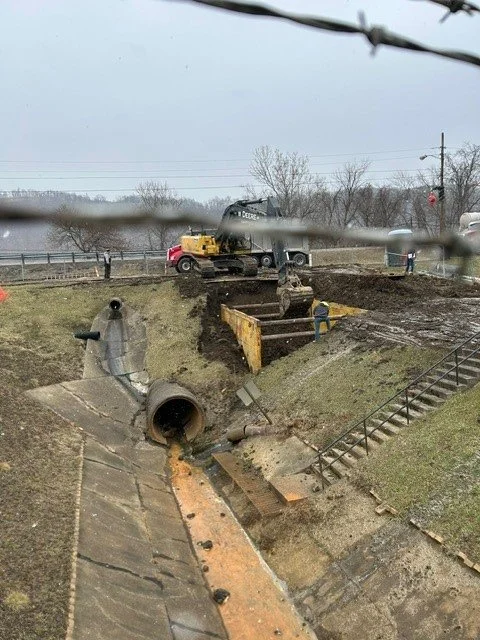
(Photo Left: Project Site Prior to Work)
Designing a pump station adjacent to the Ohio River presented challenges to the team. River stages fluctuate, and groundwater levels at the site rise and fall with the river. Geotechnical work identified elements such as stiff lean clay and dense gravel accompanied by groundwater, which was encountered at approximately 19 to 21 feet below the ground surface, near the bottom of the excavation required for the wetwell.
These conditions required careful planning for excavation support, dewatering, and structural stability. The depth of the structure and the presence of groundwater also meant that uplift forces had to be considered to prevent the wetwell from shifting during high river stages.
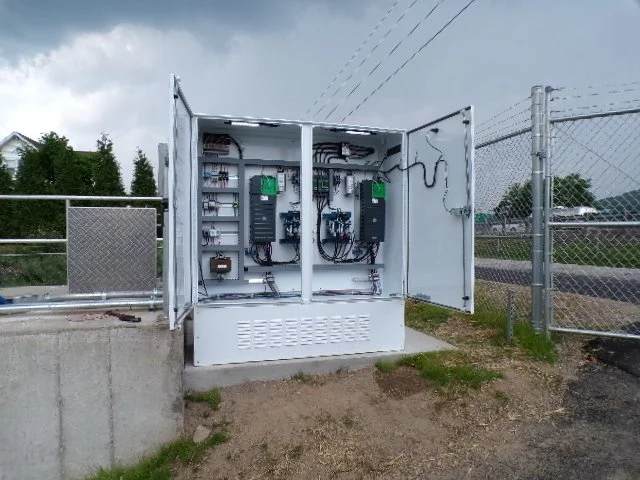
(Photo Above Left: Pump Station Construction)(Photo Above Right: Completed Pump Station Control Panel)
Matt Miller, Project Manager, said the project also addressed drainage complications caused in part by the presence of State Route 7, which runs parallel to the river and effectively acts as a barrier during certain flood conditions. In some events, water would collect on the inland side of the roadway with limited means of escape.
The new pump station provides a controlled discharge point, allowing water to be conveyed beneath the roadway and discharged into the river. Permits were obtained by the engineering team from the Ohio Department of Transportation for work within the road right of way, and coordination was required to safely install the forcemain under the highway without disrupting traffic.
The discharge structure at the river includes a 60-inch circular flap gate designed to prevent river water from flowing back into the system during high stages. The flap gate required sufficient “swing” clearance to operate properly, a detail that influenced the configuration of the pipe. This type of gate was selected to match site conditions and project needs.
In addition to the pumping equipment, the facility was designed with reliability in mind. A dedicated emergency generator and automatic transfer switch were installed to ensure the pumps remain operational during power outages. Flood events often coincide with severe weather that can interrupt electrical service. By incorporating backup power, the Village can rely on the station even under adverse conditions. Electrical engineering services included the design of a new electrical service, pump controls, and lighting systems, suitable for the pump station.
The compact site required close coordination among civil, electrical, and geotechnical teams. Matt Miller and the project team led these efforts, managing design, permitting, and construction oversight. Final construction plans detailed the site layout, wetwell installation, forcemain alignment, discharge outlet, electrical systems, and supporting infrastructure necessary to operate the facility safely. Construction also occurred near existing roadways and utilities, requiring attention to excavation limits and protection of adjacent infrastructure.
Mayor Zdinak emphasized the broader importance of the investment.
“Even if we only use it once and could save someone’s home from flooding, it would be worth it,” he said.
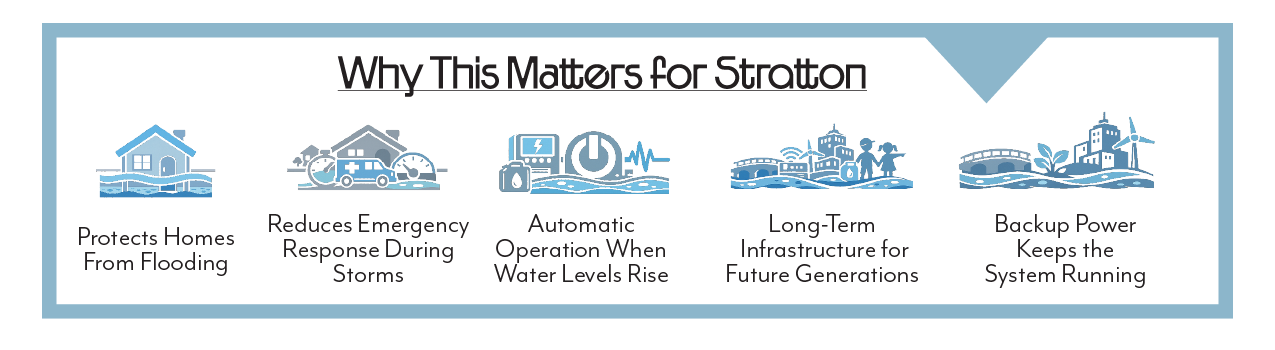
In small communities, a single flooded basement can represent a significant personal and financial hardship. The pump station was designed not for daily use, but for those critical moments when the system must perform without delay.
In small communities, a single flooded basement can represent a significant personal and financial hardship. The pump station was designed not for daily use, but for those critical moments when the system must perform without delay.
The Village received support from the project team throughout planning and construction, including assistance with securing grant funding that allowed the project to move forward. According to the Mayor, the engineering team guided the Village through each phase, from initial studies and permitting to bidding and construction oversight. That coordination was essential for a project that combined deep excavation, river proximity, highway crossings, and specialized pumping equipment.
Today, the completed facility stands as a permanent piece of infrastructure designed to serve the Village of Stratton for decades. Beneath the surface, the 22-foot-deep wetwell and high-capacity pumps are ready to activate when river levels rise, and storms move through the region. The forcemain beneath State Route 7 now provides a direct path to the Ohio River, and the emergency generator ensures the system can operate even if the grid goes down.
While the pump station may not be visible to most residents on a daily basis, its presence represents a shift from reactive measures to a long-term approach to flood protection. Instead of mobilizing portable pumps and crews during emergencies, the Village now has a fixed system designed to respond automatically. That reliability helps protect homes, streets, and public infrastructure when it matters most.