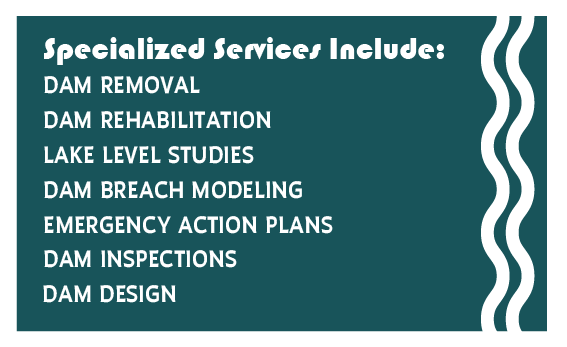
Since 1944, Spicer Group has helped communities manage, maintain, and improve surface water infrastructure. Among the firm’s most specialized services is dam safety, a practice that combines engineering expertise, environmental permitting, regulatory knowledge, and client coordination to protect public safety and natural resources.
Dams play an essential role in many communities by providing flood control, maintaining lake levels, supporting recreation, and managing water resources. As these structures age, however, ongoing inspections, maintenance, and rehabilitation become increasingly important. Ensuring a dam continues to operate safely requires a comprehensive understanding of both the structure itself and the watershed systems that influence its performance.
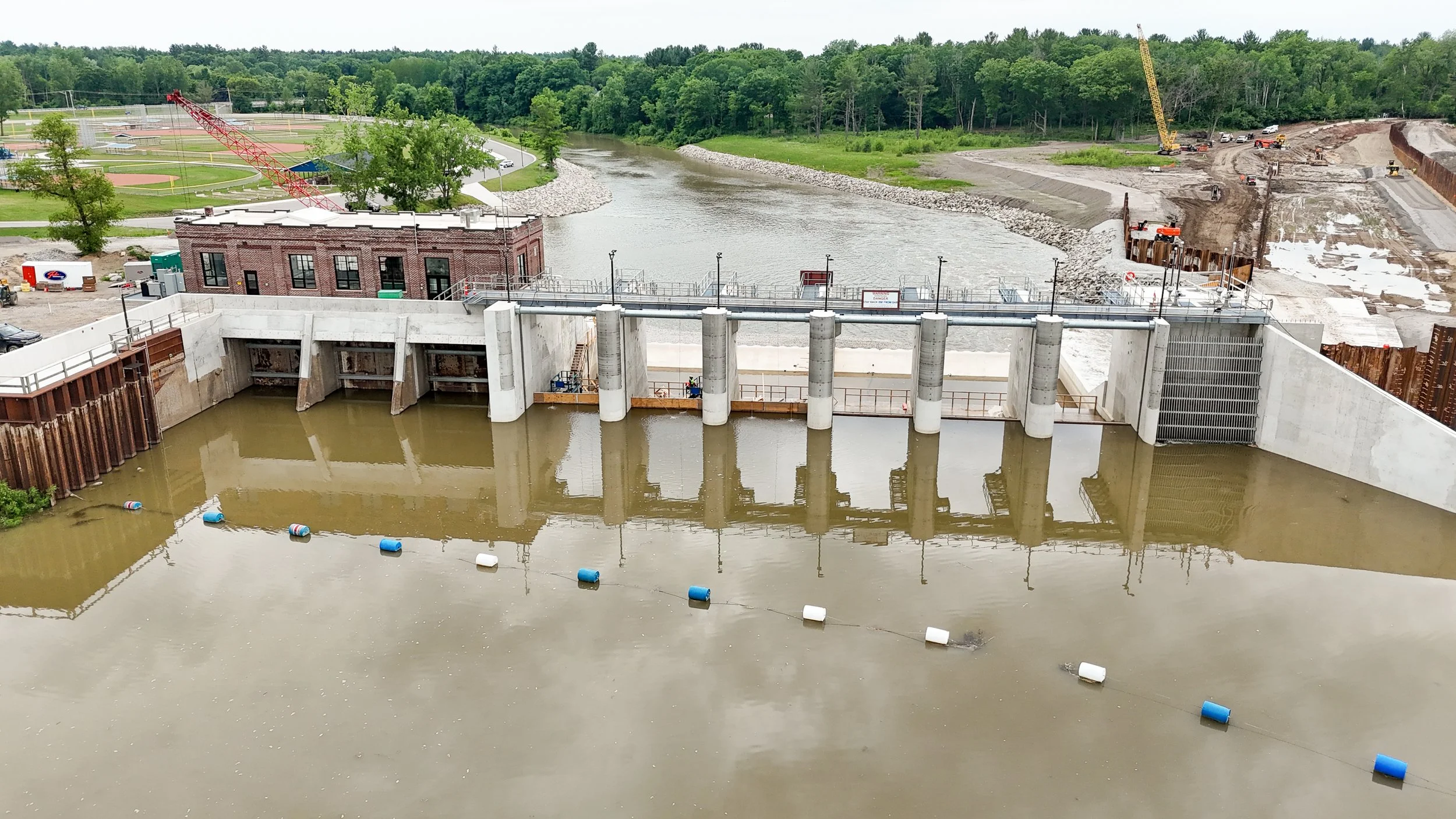
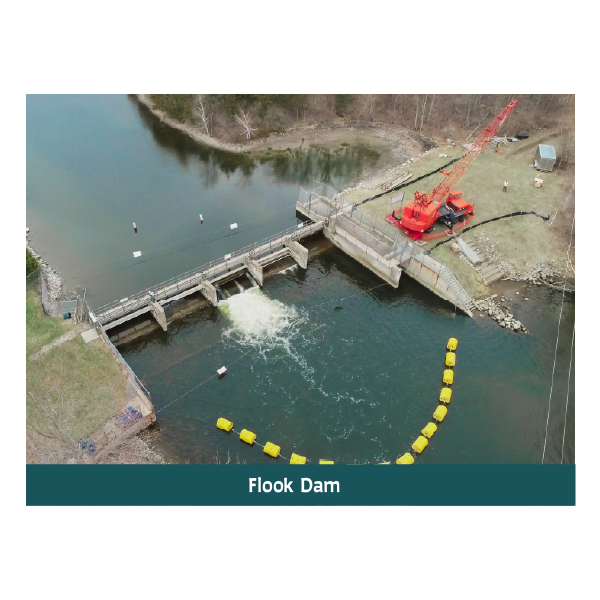
Spicer Group’s dam safety practice area serves clients throughout the United States, including Michigan, Ohio, Georgia, and beyond. The firm’s multidisciplinary approach brings together professionals from other practice areas as well, including surveyors, structural, geotechnical, and environmental engineers, and hydrology, hydraulics, and surface water specialists to evaluate, plan, rehabilitate, remove and manage dams of varying sizes and complexities.
Over the past two decades, Spicer Group has completed hundreds of dam safety inspections, lake level studies, emergency action plans, and engineering evaluations. These projects have helped private owners, municipalities, counties, watershed organizations, and state agencies navigate complex regulatory requirements while preserving the long-term safety and functionality of their infrastructure.
Dam projects often involve much more than evaluating concrete, steel, or earthen embankments. Each site presents unique challenges that require careful analysis and coordination. Hydraulic evaluations, sediment transport assessments, fish passage considerations, and stability investigations, wetland impacts, environmental contamination concerns, and aesthetic considerations can all influence project outcomes.
Whether the objective is constructing a new dam, rehabilitating an aging structure, removing a dam that has reached the end of its useful life, or modifying an existing facility to meet current standards, successful projects depend on balancing engineering requirements with environmental and community needs.
DAM SAFETY
The designs also accounted for existing drainage patterns and sought to produce a stable shoreline that seamlessly blended into adjacent topography. The intent was for the completed project to provide a stable shoreline that included many of the existing meanders. By including soil erosion and sedimentation control (SESC) measures in the design, Spicer Group ensured that the project would meet regulatory requirements while minimizing environmental impacts during construction.
Part of the design challenge involved working within areas where previous erosion control efforts, such as gabion basket riprap, had failed. These older systems had deteriorated over time, allowing waves and ice movement to further damage the shoreline. Spicer Group’s updated design replaced these systems with more durable materials and techniques, extending the life of the shoreline protection.
Key Services
One of the most important services Spicer Group provides is dam safety inspections. During an inspection, engineers evaluate a dam’s structural integrity, spillway capacity, operational adequacy, and overall condition. The resulting reports identify deficiencies that could contribute to future failures and provide recommendations for maintenance, repair, rehabilitation, or replacement. These evaluations allow owners to make informed decisions about their infrastructure and prioritize improvements before problems become emergencies.
Evaluating Risks
Emergency preparedness is another critical component of dam safety. Many dams have homes, businesses, roads, utilities, or other critical infrastructure located downstream. In these situations, Emergency Action Plans (EAPs) are often required to help communities prepare for potential incidents.
Spicer Group assists dam owners by conducting dam breach analyses and downstream flood mapping to identify areas that could be impacted by a failure. Beyond regulatory compliance, Emergency Action Plans provide valuable insight into potential risks and help owners develop proactive maintenance strategies that reduce the likelihood of future problems.

Unique Use of Technology
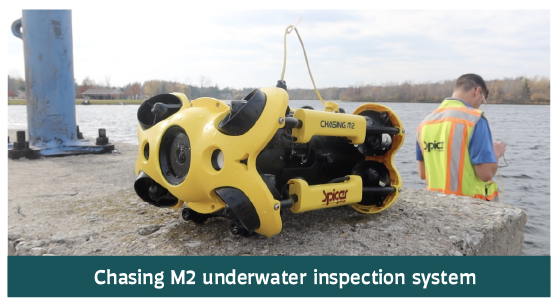
Technology continues to play an increasingly important role in dam safety evaluations, and Spicer Group remains committed to utilizing advanced tools that improve the quality and accuracy of inspections. One example is the firm’s use of the CHASING M2 remotely operated vehicle (ROV), an underwater inspection system designed specifically for professional applications.
The CHASING M2 is an underwater drone featuring eight thrusters that allow precise maneuvering in all directions, enabling inspectors to access areas that are difficult or impossible to evaluate through traditional methods. Equipped with a 4K camera, 12-megapixel image stabilization technology, and 4,000-lumen LED lighting, the system provides high-resolution imagery even in low-visibility underwater environments.
Communication is Key
While engineering expertise and technology are critical components of dam projects, successful outcomes often depend just as heavily on communication and collaboration. Dam rehabilitation, modification, and removal projects frequently involve numerous stakeholders, including property owners, environmental organizations, regulatory agencies, local governments, and community members. Balancing these interests requires transparency, responsiveness, and a commitment to building consensus throughout the project process.
Spicer Group places a strong emphasis on maintaining open communication with clients and stakeholders from project initiation through construction and completion. Our experience working within local, state, and federal regulatory frameworks helps streamline permitting processes while ensuring project goals remain aligned with community needs and environmental considerations.
Sustainable Objectives
As infrastructure continues to age and regulatory requirements evolve, dam owners face increasing challenges in maintaining safe and reliable facilities.
Through decades of experience, multidisciplinary expertise, advanced technology, and commitment to client service, Spicer Group continues to help communities address these challenges with practical, sustainable solutions.